
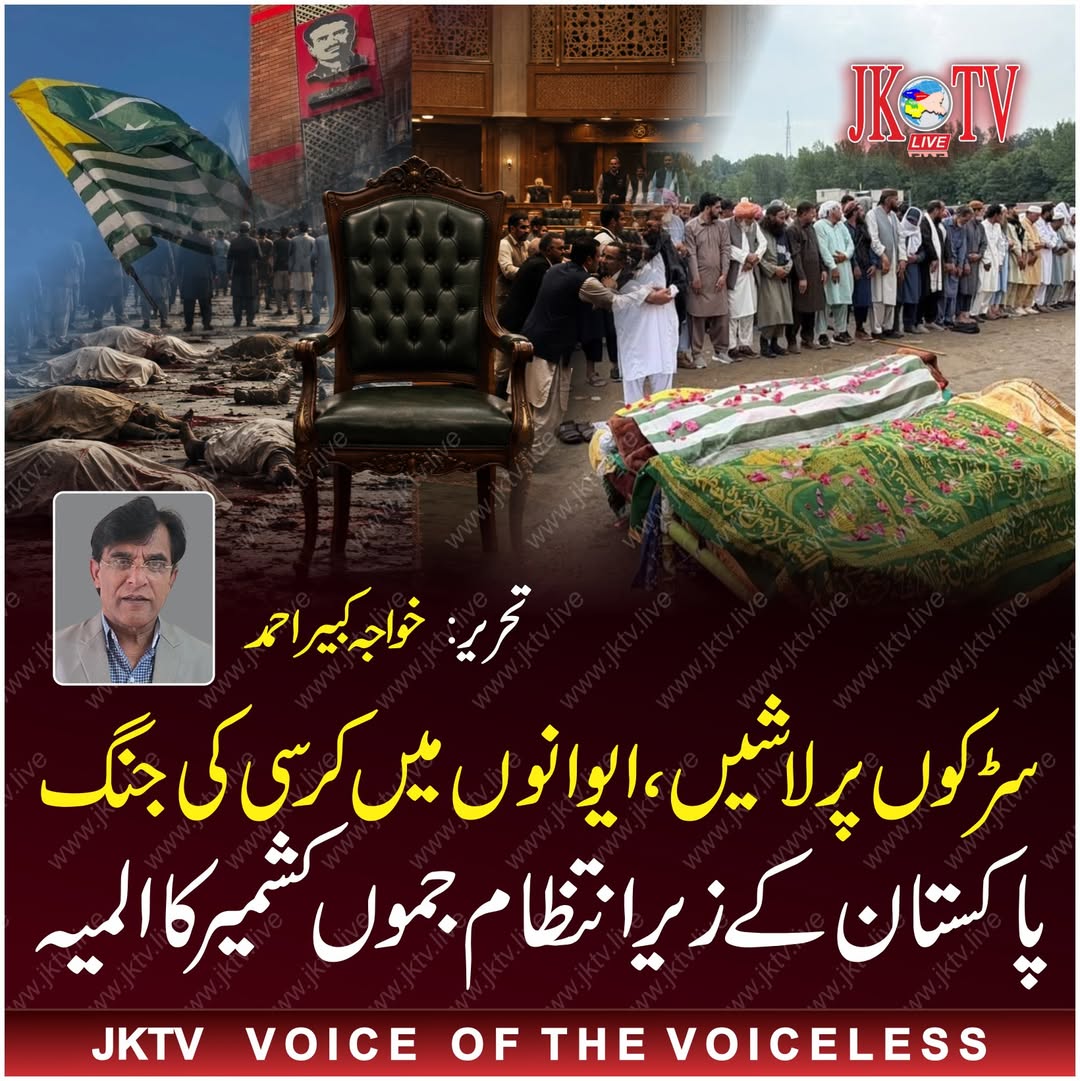
The general elections held in Pakistan-administered Jammu and Kashmir in July and August 2026 have turned out to be one of the most dramatic and darkest turning points in the region’s political history. On the one hand, a wave of public anger and resistance has shaken the foundations of the traditional political system; on the other, the game of entering the corridors of power through the back door has reached its peak. These elections are clear evidence of the widening and increasingly alarming gap between the official state narrative and the realities on the ground—a gap that can no longer be concealed.
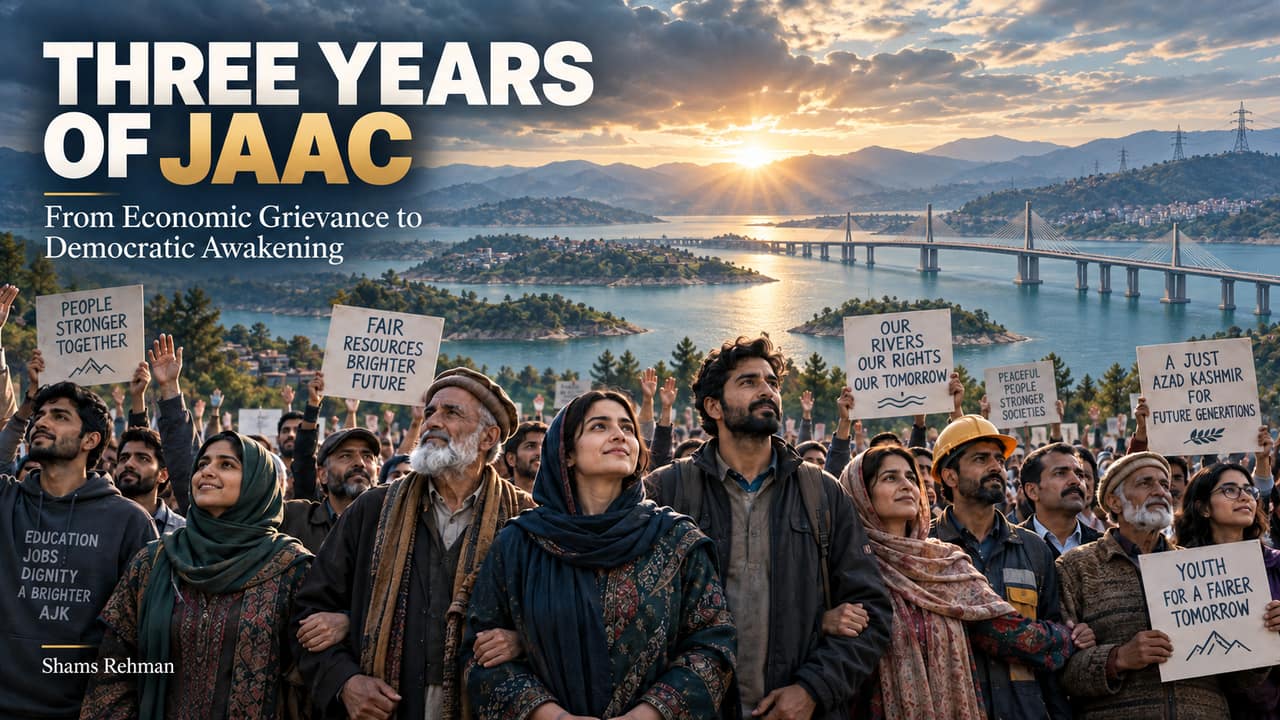
The current rights movement emerged primarily through the platform of the Joint Awami Action Committee (JAAC). Its demands included the permanent implementation of subsidies on electricity and flour, the abolition of feudal privileges enjoyed by the political elite, and the permanent abolition of the 12 reserved seats allocated to refugees residing in Pakistan. The people of the region believe that these 12 seats have long been used by political parties sitting in Pakistan’s federal capital as a political weapon to install governments of their choice in Pakistan-administered Jammu and Kashmir and to gain control over its resources.
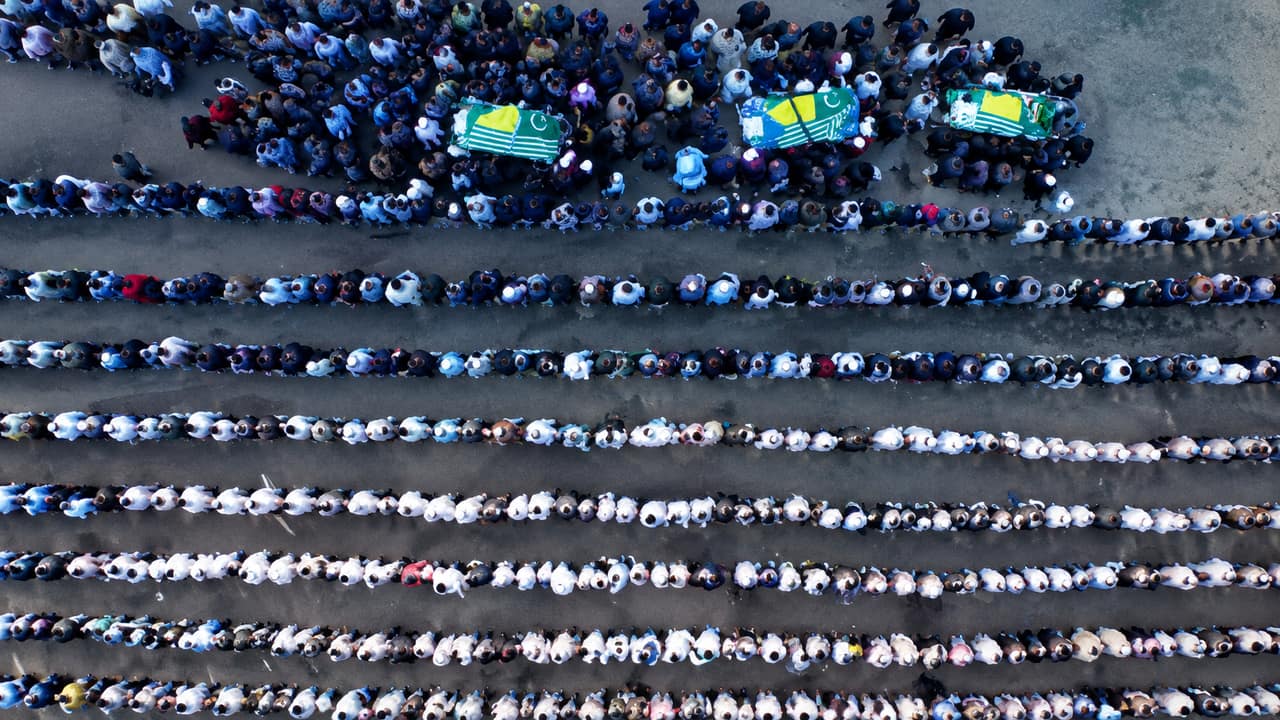
The boycott and intense public resistance have plunged the entire region into a severe humanitarian and political crisis. As a result, polling did not take place at all in approximately seven constituencies of the Legislative Assembly. The people of these areas have remained continuously on the streets for nearly three months, demanding their fundamental rights. Yet the state responded to this peaceful movement with excessive use of force. In the horrific clashes with the forces, more than one hundred unarmed civilians have reportedly been killed and hundreds seriously injured, while hundreds of young people, including movement leaders, have been detained or have gone missing under some of the harshest laws, including anti-terrorism legislation.
Despite this severe state repression, internet shutdowns and blackouts, unarmed and peaceful citizens from all three divisions are still present on the streets of the Poonch Division and remain unwilling to accept what they regard as a puppet electoral process.
On the other hand, wherever the electoral process was somehow completed, voters decisively rejected political heavyweights intoxicated by traditional slogans, dynastic influence and entrenched political power, turning some of them into symbols of political defeat.
The biggest shock of this political upheaval was suffered by former Prime Minister and President of the Muslim Conference, Sardar Attique Ahmed Khan, who suffered a crushing defeat at the hands of a young and relatively new political figure, Sajid Iqbal Abbasi, in his own traditional stronghold of Dhirkot (LA-14), where his family had been considered virtually unbeatable since 1985.
Similarly, billionaire businessman and former Prime Minister Sardar Tanveer Ilyas, who contested from Upper Neelum on the strength of his wealth and political influence, was overwhelmingly rejected by the electorate and secured only a few thousand votes.
While the streets of Pakistan-administered Jammu and Kashmir are stained with the blood of people's loved ones, the "game of forming governments" continues shamelessly in Muzaffarabad and Islamabad.
The Pakistan Peoples Party also suffered a major setback. Its senior-most leader and outgoing Speaker of the Legislative Assembly, Chaudhry Latif Akbar, lost his seat from Muzaffarabad. Meanwhile, PPP President and one of the strongest contenders for the premiership, Chaudhry Yasin, suffered a major upset defeat in Kotli at the hands of PML-N candidate Raja Riasat. In the Nakyal constituency of the same district, another veteran PPP politician and former minister, Chaudhry Javed Iqbal Budhanvi, was also handed a humiliating defeat by PML-N candidate Sardar Umair Naeem.
While the streets of Pakistan-administered Jammu and Kashmir are stained with the blood of people’s loved ones, the “game of forming governments” continues shamelessly in Muzaffarabad and Islamabad.
The most shameful and controversial aspect of this political game is the nomination by the central leadership of the Pakistan Muslim League-Nawaz (PML-N) of Barrister Iftikhar Gilani for the office of Prime Minister. He had himself been rejected by the electorate and defeated by a Pakistan Peoples Party candidate in the recent general election from Muzaffarabad’s LA-29 constituency.
In what critics describe as a mockery of the public mandate and a violation of the basic principles of democracy, the PML-N has reportedly facilitated his election through a reserved technocrat seat after his defeat in the general election, paving the way for him to be installed as Prime Minister of Pakistan-administered Jammu and Kashmir. Public and political circles have described this move as a denial of the rights of directly elected members of the Assembly.
The decision has triggered a deep earthquake within the PML-N, the largest party involved in government formation, with reports of serious disagreements and factional divisions emerging within its ranks.
The PML-N president and widely regarded strongest contender for the premiership, Shah Ghulam Qadir, whom Nawaz Sharif had previously nominated himself, is reportedly deeply disappointed by the decision. He has expressed strong reservations before the central leadership and has categorically refused to vote for Iftikhar Gilani or attend the Assembly session.
Along with him, former Prime Minister Raja Farooq Haider and several newly elected PML-N members have also reportedly raised the banner of revolt against what they see as an attempt to impose a defeated candidate on the Assembly through a technocrat seat.
Pakistan-administered Jammu and Kashmir is currently trapped in a deep political and humanitarian crisis. On one side are ordinary people sitting on the streets demanding justice for their loved ones; on the other is a self-serving political elite that, after crushing even an artificial public mandate, has turned against itself in its lust for power.
History bears witness that when the political game inside legislatures becomes so detached from the wounds of the people, it is often the entire system that eventually comes crashing down.
In the traditional politics of Pakistan-administered Jammu and Kashmir, placing trust in anyone can amount to deceiving oneself. The recent history of the region is a witness to the fact that these politicians are all, in one way or another, willing to compromise their principles for power. Those who can elect a Prime Minister in the middle of the night can do almost anything.
Therefore, what decision they may take in the coming hours remains impossible to predict at this stage.
Comments (0)