

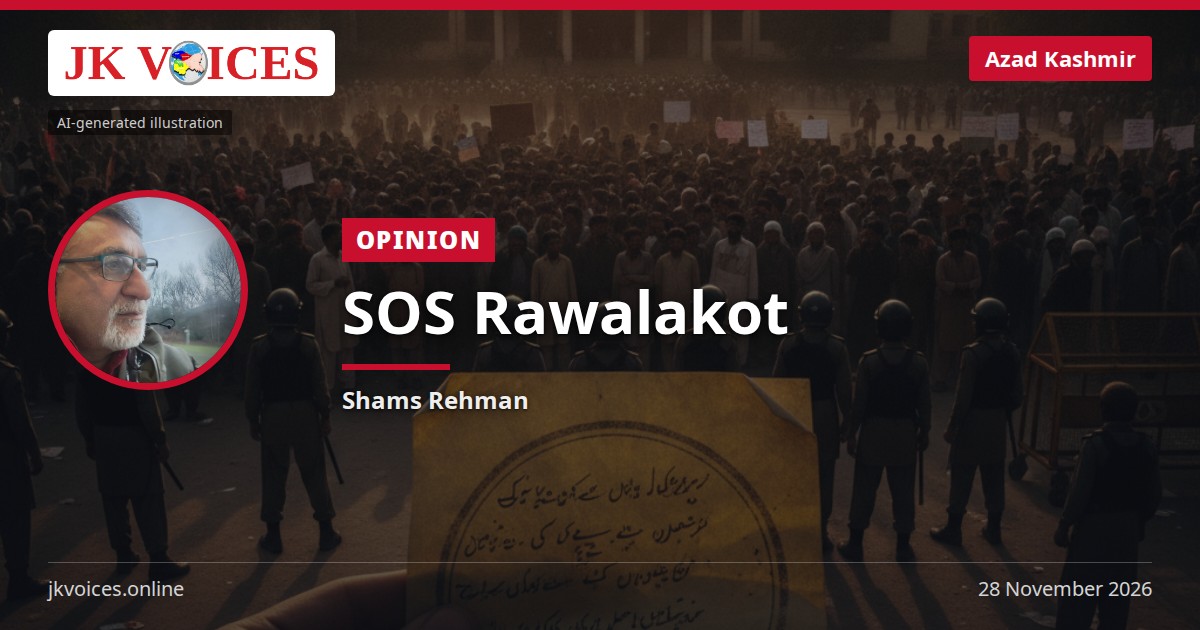
Before a government sends armed personnel against a public assembly, it must answer three questions. What law authorises them to act? What danger makes force necessary? And what level of force is proportionate to that danger? The authorities must use non-violent means wherever practicable. Where dispersal is lawful and force unavoidable, they should ordinarily give people a clear warning and a reasonable chance to leave. The rule on live ammunition is stricter. Under the UN Human Rights Committee’s standards, firearms must never be used simply to disperse an assembly. Their use against an individual must be strictly necessary to confront an imminent threat of death or serious injury. digitallibrary.un.org
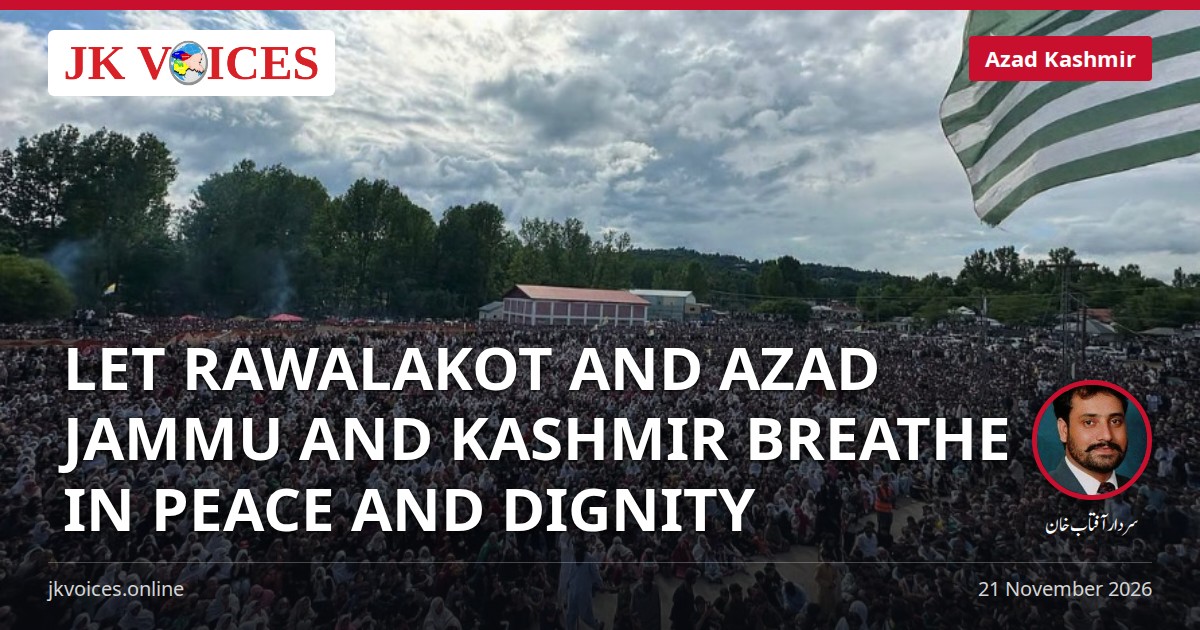
In Rawalakot, families are reading a hospital circular on Facebook and asking what the government expects to happen next. Dated 26 November, the AJK health department’s order directs nine surgical technicians to report immediately to CMH Rawalakot. It cites an emergency situation in Poonch district and a shortage of operating-theatre staff. It leaves the nature of the emergency unspecified. Whether either government has authorised another operation remains unverified. After months of reported shootings, injuries and detentions, people at the sit-ins have every reason to ask for a direct answer. Women and children are among those gathered in their thousands. They should be able to hear from their government today what it is doing to keep them safe. kashmirurdu.pk
Who gave the authority, and under what law?
We are told that the right to use force lies only with the state. In Azad Jammu and Kashmir, the question that follows is immediate. Who can order Pakistani personnel to exercise police powers here, and under what law? AJK has its own Interim Constitution and sits outside Pakistan’s provincial structure. Article 257 of Pakistan’s Constitution treats accession as a decision for the people of the State of Jammu and Kashmir. The UN Commission’s resolution of 13 August 1948 envisaged the withdrawal of Pakistani troops and administration by local authorities in the areas they vacated, pending a final settlement. For any operation today, Islamabad and Muzaffarabad should disclose who requested the deployment, who authorised it, what powers were given to the personnel and who commands them. www.pakp.gov.pk
Article 4 of AJK’s Interim Constitution protects life and liberty and guarantees peaceful assembly without arms, subject to reasonable restrictions imposed by law in the interest of public order. Pakistan’s human rights obligations extend, under the UN Human Rights Committee’s interpretation, to people under its power or effective control. For a family whose relative has been taken away, that chain of authority has a practical meaning. Who is holding them? Where are they? On what grounds were they detained? When will a court hear their case? law.gok.pk
How a demand for flour became a security case
The movement began with questions people could ask at a flour depot or over an electricity bill. Why was flour beyond the reach of so many households? Why was electricity so expensive in a region that produces hydropower? The demands widened to include public services, representation and an end to privileges enjoyed by those in power. People with different views on Kashmir’s future could agree on what they wanted the AJK government to do. The people at the sit-ins are still asking it to implement an agreement it signed with their representatives.
At some gatherings, nationalists called for an independent Kashmir. Some activists chanted about giving their youth for revolution, killing and being killed. Some waved branches and shouted threats against those they accused of facilitating Pakistan’s rule. There are also accounts of core leaders using revolutionary language later, after reports of widespread killings. Words about killing deserve scrutiny, especially when spoken by leaders. Who said them, in what circumstances, and was anyone being urged to commit violence that was likely to follow? Was the speaker acting on behalf of the committee? The answers matter when the government seeks to attribute an individual’s conduct to a whole movement. digitallibrary.un.org
AJK’s Interim Constitution restricts political activity against accession to Pakistan. A ban under AJK’s Anti-Terrorism Act requires reasonable grounds that meet the statutory criteria. The government should disclose what evidence it had when it proscribed the Jammu Kashmir Joint Awami Action Committee, or JKJAAC, and how that evidence applied to the organisation itself. Slogans raised after the ban cannot supply grounds that had to exist when it was imposed. And for the unarmed person sitting nearby, the protection of the law does not disappear because someone else waved a stick or shouted a threat. www.ohchr.org
Under the UN Human Rights Committee's standards, firearms must never be used simply to disperse an assembly.
Who do the armed men speak for?
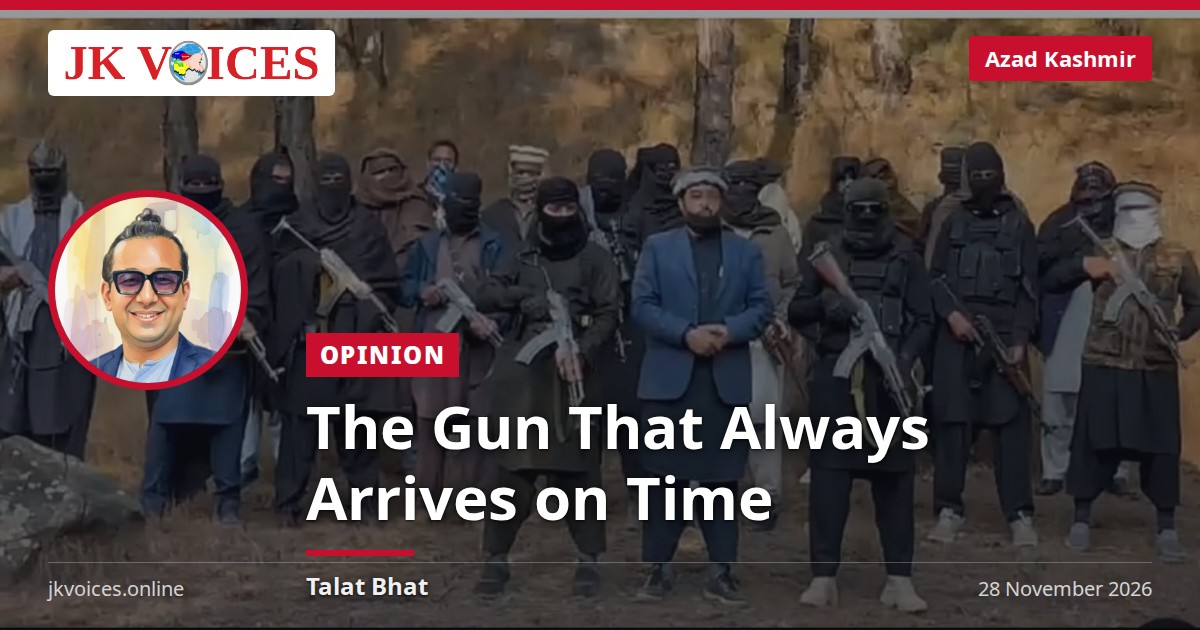
In Mehtab Aziz’s account of a video reportedly circulated on 27 November, Ghazi Shehzad stands beside about a dozen masked, armed men and warns that if security forces launch an operation in Azad Kashmir, his group will answer gunfire with gunfire. Shehzad reportedly says that Janbaz Force predates JKJAAC and denies links with it. The authorities have their own record of dealings with him. AJK’s Counter-Terrorism Department arrested him in May 2023, before JKJAAC was formed as a joint committee. He escaped from Rawalakot jail in June 2024 while awaiting trial. Why are people at a sit-in being asked to answer for a man the authorities were already investigating? What evidence connects his warning to a decision by their representatives? www.independenturdu.com
Some people in AJK believe that armed groups once thought to have links with Pakistani agencies now act beyond their influence. Others suspect that elements within the establishment are using the video to discredit the movement and obstruct talks. Those claims remain unverified. On 28 November, JKJAAC publicly denied any affiliation with an armed organisation, group or individual and reaffirmed its commitment to non-violence. The warning warrants investigation. Using it to justify an armed operation against the sit-ins, on the evidence disclosed so far, would be an abuse of state power. If officials allege an organisational link, they should produce evidence of it. If they claim an imminent threat, they must identify who poses it and direct any lawful response at those responsible. digitallibrary.un.org JKJAAC statement, 28 November 2026
Whose dead did the Assembly remember?
On 25 November, the AJK Legislative Assembly unanimously adopted a resolution paying tribute to Police and Rangers personnel reported killed during the unrest and expressing condolences to their families. Those families deserved to be heard. Where, in the published accounts of the resolution, were the civilians reported killed or wounded, the people detained, or those whom families say were taken away and are still missing? The Assembly affirmed the right to peaceful protest. What does that assurance mean to parents asking who shot their son, or to a family trying to find out whether someone taken from their home is still alive? Whom does the Assembly represent when those questions find no place in its account of the crisis? www.radio.gov.pk
The estimate of around 160 deaths remains independently unverified. An independent inquiry should establish the toll, account for the injured and determine who fired, under whose command and in response to what threat. Families who say a father or brother was taken because the person sought was absent are describing conduct that, if established, would amount to arbitrary detention. Where officials deny holding someone or conceal their whereabouts, the allegation may also raise the issue of enforced disappearance. Relatives who say they were forced to record videos declaring that a son or brother had “gone astray” should be able to give evidence without fear. A recording made under coercion cannot establish a voluntary admission or prove that a movement is armed. law.gok.pk
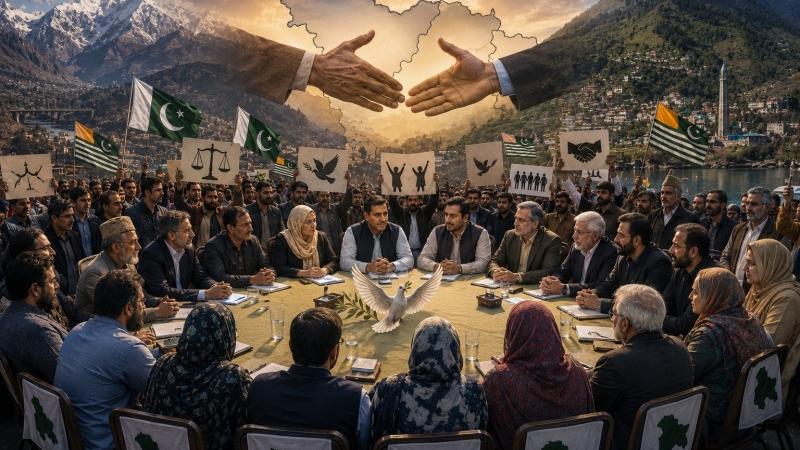
Can we blame people for peacefully challenging a political set-up that leaves so many families without answers? If they convene a People’s Assembly, let the families of the dead, injured, detained and missing speak first. Let the people at the sit-ins set out the commitments they say the government has yet to honour. And let that assembly answer the legislature’s resolution with an invitation of its own. Come to the table without preconditions. Agree reciprocal steps to reduce tensions. Give families a way to establish what happened, and put dates against the commitments that brought people out in the first place.
There is still time to talk
JKJAAC says it has challenged its proscription through constitutional and legal channels. It has asked for a lawful decision on its review application, compliance with the government’s obligations in the pending writ proceedings and concrete steps to build confidence. It has welcomed simultaneous de-escalation. Both governments can act on that opening today. They can protect civilian life, ensure access to medical care, disclose where detainees are held and empower representatives to negotiate an agreement. The government upholds its writ when it acts within the law, accounts for the conduct of its officers and honours what it signs. The people can return home with dignity when they have been heard and know what has been agreed. JKJAAC statement, 28 November 2026
To the governments in Islamabad and Muzaffarabad, the appeal is urgent. Refrain from any further escalation in Rawalakot or elsewhere in AJK. Give the families at the sit-ins a clear assurance that their lives will be protected. Open negotiations with JKJAAC without preconditions, including any demand that people end the sit-ins before talks begin. Reach an agreement that upholds lawful government, addresses the people’s demands and allows them to go home safely and with dignity.
Comments (0)