
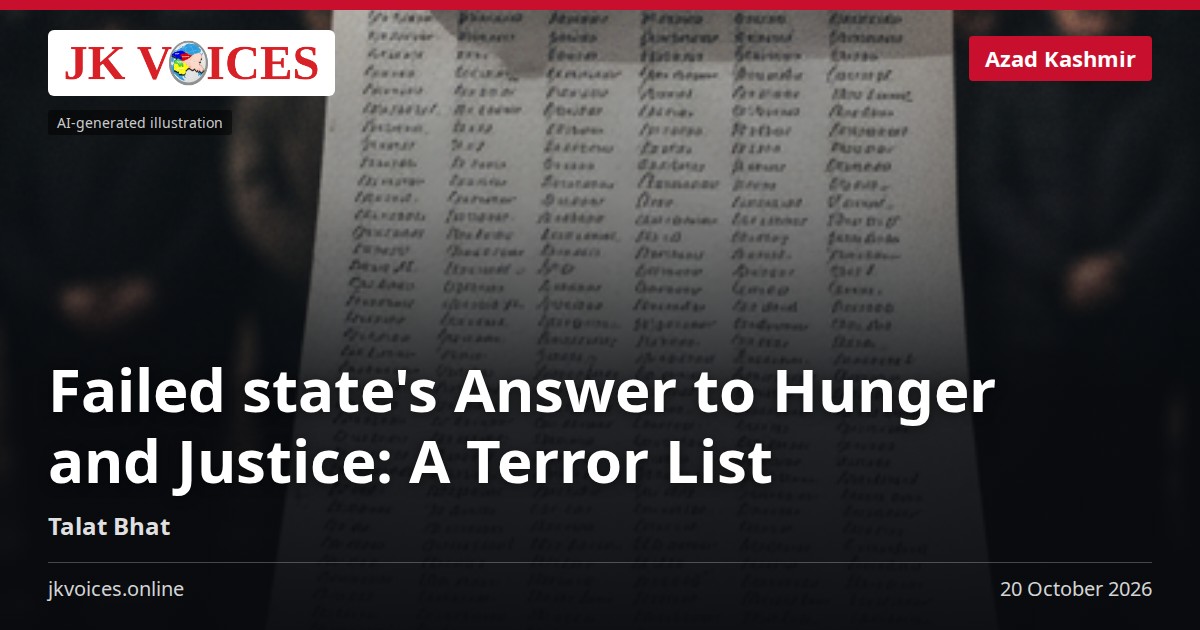
Four months after banning the Jammu Kashmir Joint Awami Action Committee, the government of Pakistan-administered Kashmir has added another 25 people to the Fourth Schedule of its anti-terrorism law. The total now passes 400. Sixteen of the new names come from Poonch, five from Sudhnoti, two from Neelum, and one each from Bagh and Mirpur. An earlier list included a local journalist from Rawalakot.
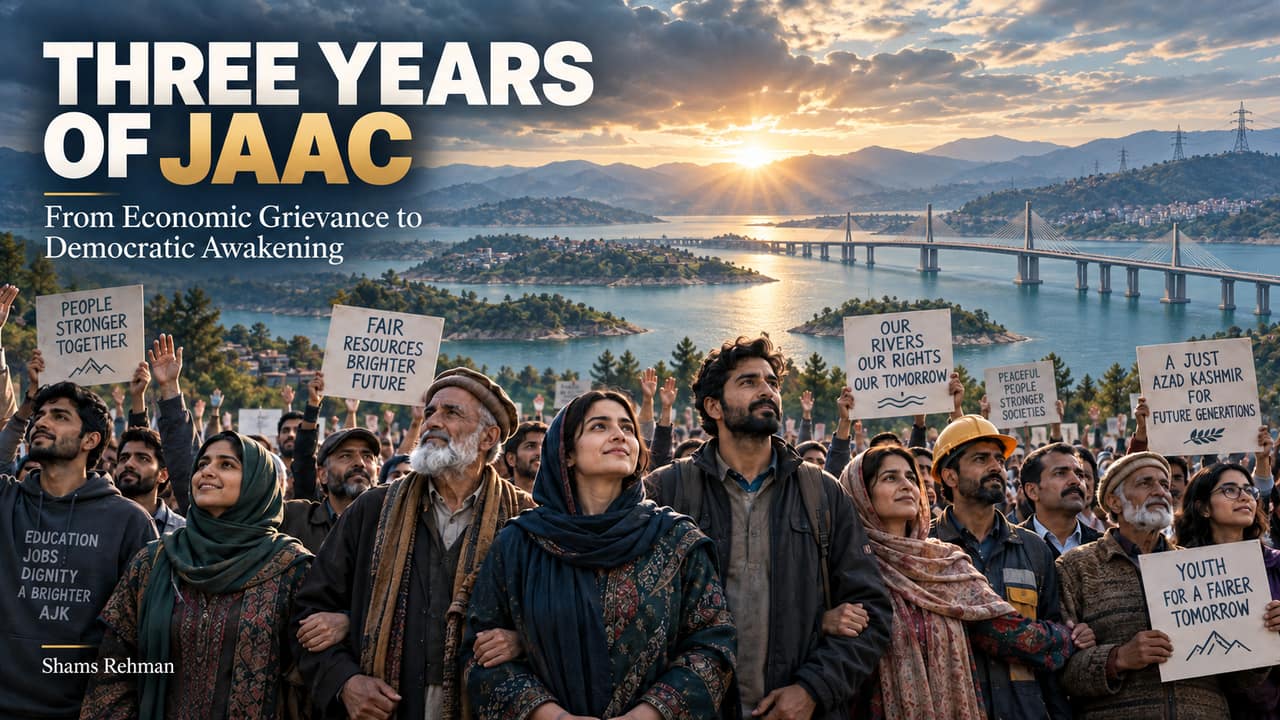
These are not militants with weapons caches. They are shopkeepers, lawyers, students, teachers and traders from the same towns that filled the streets demanding cheaper electricity, subsidised flour, basic healthcare and an end to the privileges of a political elite. Their crime, in the eyes of Muzaffarabad and Islamabad, is that they organised. And they did it peacefully enough, and widely enough, that the state could not ignore them.
What the Fourth Schedule really means
On paper, the Fourth Schedule is a monitoring tool. In practice, it is punishment without trial. A person on the list must report to the local police station every week. They cannot travel to another district without informing the police in advance. Passports, bank accounts and identity-card services can be frozen. Their names are approved by district committees that include intelligence officials, whose reports are never shown to the accused and cannot be challenged in open court.
Their crime, in the eyes of Muzaffarabad and Islamabad, is that they organised.
No charge. No evidence presented. No judge. Just a name on a notification, and a life put on hold.
When a journalist from Rawalakot ends up on such a list, the message goes far beyond one individual. It tells every reporter in Poonch that covering the people's movement can cost them their freedom of movement, their livelihood and their reputation. That is not counter-terrorism. That is intimidation of the press.
A state that has run out of answers
The demands raised in Poonch, Sudhnoti and Bagh were never mysterious. People generating electricity for Pakistan's grid asked why they pay some of the highest tariffs. People living along the Line of Control asked for hospitals, roads and jobs. People ruled by an assembly with reserved seats for refugees living
Comments (0)