
This is Democracy Now!, democracynow.org. I'm Amy Goodman, with Nermeen Shaikh. We turn now to Pakistan-administered Kashmir, where dozens of people have been killed in clashes between security officials and protesters over the last two months. Control over the heavily militarized region of Kashmir is divided between India and Pakistan.
Demands for Regional Autonomy
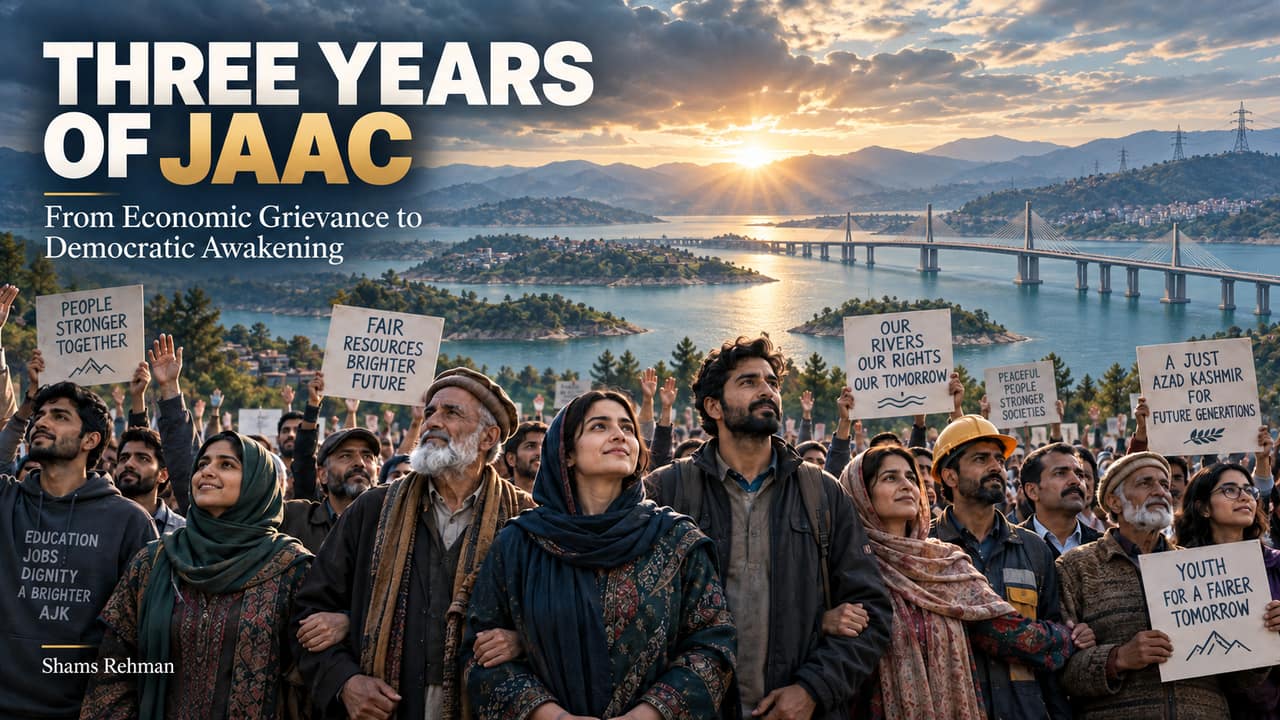
Seven years ago this week, India's right-wing Modi government revoked Indian Kashmir's limited autonomy, bringing it under direct federal rule. In Pakistan-administered Kashmir, earlier this summer, a coalition of local politicians, activists, and business leaders, called the Joint Action Awami Committee, or the JAAC, began protests over the soaring cost of living, but also demanding more political autonomy for the region.
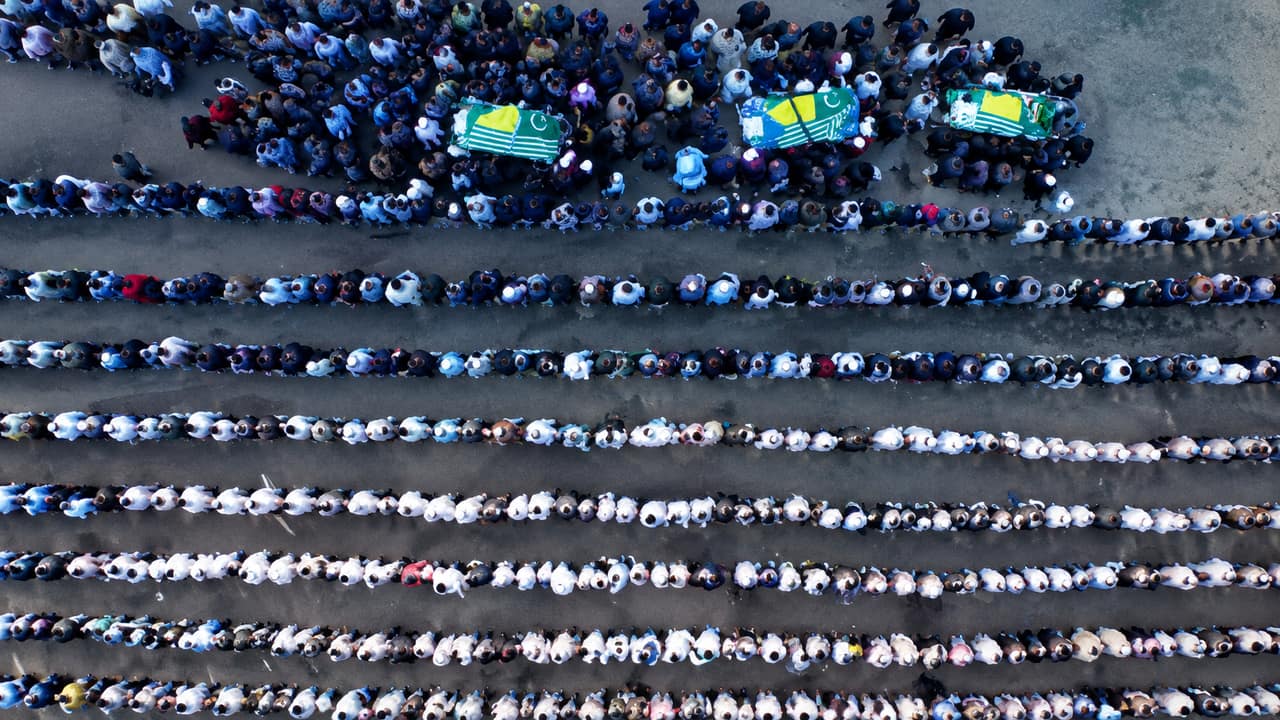
In response, the Pakistani government banned the group under counterterrorism laws and shut down the internet. As protests continued, the government responded with force, killing at least 40 people. The BBC spoke to a young man who was involved in the protests and did not want to be identified. "We only asked for affordable flour, electricity, and our basic rights.
Election Boycott and Media Ban
Instead, our brothers are being killed. Why are live bullets being fired at us?" The Pakistani government has now begun a sweeping new crackdown on international media seeking to report from any areas outside the country's three major cities, and has ordered all foreign media to leave Pakistan-administered Kashmir immediately. Meanwhile, Pakistan's ruling party's in the lead in the first phases of local elections in the region, and authorities claim an over 50% voter turnout, despite calls for a boycott from the now-banned Joint Action Awami Committee.
This is local resident Ali Omar explaining why people want to boycott the elections. "Muzaffarabad and Azad Kashmir are not in a condition where elections can be held here." "The internet is shut down," "and everyday life has completely come to a standstill." "I think the reason people are boycotting is basically the Action Committee," "because of the oppression and atrocities" "that were inflicted on the Action Committee."
Interview with Mirza Waheed
"People feel sympathy for them." For more, we're joined in London by the award-winning Kashmiri novelist and journalist Mirza Waheed. His books include "The Collaborator" and "The Book of Gold Leaves", his forthcoming book, "Maariam and Son". Thank you so much, Mirza, for joining us.
We only have a few minutes. What is happening in Pakistan-controlled Kashmir? And for the global audience, to understand this area? Thanks for having me.
Pakistan-administered Kashmir, you know, has long been portrayed as self-governed, autonomous, or Azad, meaning free. And it's been relatively safe compared to where I come from, where I grew up, which is Indian-administered Kashmir. But this changes that, this punctures that picture to some extent, because, and as your clips showed, there's deep dissatisfaction with local governance structures.
So Kashmiris in that part of Kashmir basically are saying that while the larger issue remains unresolved, their basic rights, political rights, economic rights, they need to be addressed. They can't wait forever for those rights to be given to them. And I've been reading about what's been happening on the ground. The discontent is not recent.
Parallels with Indian Kashmir
It's been simmering under the surface for a while, and now it's kind of burst out in the open. The Pakistan state has not handled this very well at all, because they, this is, you know, the violence that we've seen in the last few weeks is chillingly reminiscent of what we used to see in Indian-administered Kashmir. Of course there are big parallels, big divergences. In Indian-administered Kashmir, there's been decades of militarization and repression and oppression.
Here, it's, the unrest is recent. But some chilling parallels in terms of indiscriminate use of violence, cutting off the entire region from the rest of the world, no internet, people who are wounded not going to hospitals for fear of reprisals. So this is, this reminded me of, you know, the city I grew up in, Srinagar. And I think one of the underlying issues also is that the whole region is not as developed as the rest of Pakistan.
Economic Grievances and Representation
So while the Pakistani state has always maintained that this is our favorite child, as one of this, a government spokesman recently put it, or Kashmir is the jugular vein of Pakistan, it's not as developed as the rest of Pakistan. 27% unemployment among youth in, in, you know, in Pakistan-administered Kashmir. That tells you a lot about what's been going underneath. And now all these grievances, you know, about increasing prices, unemployment, healthcare, infrastructure, they have coalesced into a larger, broader critique of the political arrangement, by which I mean that this, this committee that you mentioned, JAAC, they have been demanding that the 12 seats reserved for, in the, in the local assembly for refugees from Indian-administered Kashmir who came to this part of Kashmir post-partition, they should be abolished, because they believe that, you know, out of a number of 53 total seats, if you have 12 which are reserved, that undermines local representation.
I hope I've kind of clarified this. Very quickly Mirza, yes you have. If you could just say, you know, the history of the region, the division of Kashmir, India, Pakistan, and then also the smallest bit, China, and the colonial legacy that led to this situation in the first place. I think this is, we can see this is, these are, this is the rupture of the Partition, and we are seeing these splinters, you know, again and again in all parts of Kashmir.
History of the Partition
So in 1947, Kashmir was this one state, called Jammu and Kashmir state, and it was split between India and Pakistan because they couldn't agree on a solution. They said they're going to solve it later via a referendum, via a plebiscite, which was, which has never taken place. And then they fought wars over Kashmir, at least three wars, and recently, last year, they fought, you know, they fought this air battle after tourists, Indian tourists, were killed in, in Indian-administered Kashmir.
Muzaffarabad and Azad Kashmir are not in a condition where elections can be held here.
So it'll flare up, it'll always flare up. And the region is now, obviously, both these places are governed by, India controls Indian-administered Kashmir with an iron grip. Pakistani state's claim that this region is allowed to be free, is Azad, but we all know it's, there's nominal autonomy there. So it has a legacy of Partition, and the division was quite arbitrary.
It's a line drawn across... 10 seconds, Mirza. Sorry? 10 seconds. Okay, so it's, the division is, and there are no rights.
Concluding the Discussion
Basically, it's a struggle for dignity on both sides. We want to thank you so much for being with us, and we will continue to follow this. Mirza Waheed, journalist and award-winning Kashmiri novelist. That does it for our show.
I'll be in Edinburgh, Scotland, at the Kings Theatre on August 11th, and on August 12th showing of "Still the Story" play at the Bertha DocHouse in London. Right now, we're here in New York. I'm Amy Goodman, with Nermeen Shaikh. Thanks for watching Democracy Now! on YouTube.
Support Democracy Now
Subscribe to the channel and turn on notifications to make sure you never miss a video. And for more of our audience-supported journalism, go to democracynow.org, where you can download our news app, sign up for our newsletter, subscribe to the daily podcast, and so much more.
This is Democracy Now!, democracynow.org. I'm Amy Goodman, with Nermeen Shaikh. We turn now to Pakistan-administered Kashmir, where dozens of people have been killed in clashes between security officials and protesters over the last two months. Control over the heavily militarized region of Kashmir is divided between India and Pakistan.
عوامی ایکشن کمیٹی کے مظاہرے
Seven years ago this week, India's right-wing Modi government revoked Indian Kashmir's limited autonomy, bringing it under direct federal rule. In Pakistan-administered Kashmir, earlier this summer, a coalition of local politicians, activists, and business leaders, called the Joint Action Awami Committee, or the JAAC, began protests over the soaring cost of living, but also demanding more political autonomy for the region.
In response, the Pakistani government banned the group under counterterrorism laws and shut down the internet. As protests continued, the government responded with force, killing at least 40 people. The BBC spoke to a young man who was involved in the protests and did not want to be identified. "We only asked for affordable flour, electricity, and our basic rights.
بین الاقوامی میڈیا پر کریک ڈاؤن
Instead, our brothers are being killed. Why are live bullets being fired at us?" The Pakistani government has now begun a sweeping new crackdown on international media seeking to report from any areas outside the country's three major cities, and has ordered all foreign media to leave Pakistan-administered Kashmir immediately. Meanwhile, Pakistan's ruling party's in the lead in the first phases of local elections in the region, and authorities claim an over 50% voter turnout, despite calls for a boycott from the now-banned Joint Action Awami Committee.
This is local resident Ali Omar explaining why people want to boycott the elections. "Muzaffarabad and Azad Kashmir are not in a condition where elections can be held here." "The internet is shut down," "and everyday life has completely come to a standstill." "I think the reason people are boycotting is basically the Action Committee," "because of the oppression and atrocities" "that were inflicted on the Action Committee." "People feel sympathy for them." For more, we're joined in London by the award-winning Kashmiri novelist and journalist Mirza Waheed.
کشمیری مصنف مرزا وحید کی گفتگو
His books include "The Collaborator" and "The Book of Gold Leaves", his forthcoming book, "Maariam and Son". Thank you so much, Mirza, for joining us. We only have a few minutes. What is happening in Pakistan-controlled Kashmir?
And for the global audience, to understand this area? Thanks for having me. Pakistan-administered Kashmir, you know, has long been portrayed as self-governed, autonomous, or Azad, meaning free. And it's been relatively safe compared to where I come from, where I grew up, which is Indian-administered Kashmir.
بنیادی اور معاشی حقوق کے مطالبات
But this changes that, this punctures that picture to some extent, because, and as your clips showed, there's deep dissatisfaction with local governance structures. So Kashmiris in that part of Kashmir basically are saying that while the larger issue remains unresolved, their basic rights, political rights, economic rights, they need to be addressed.
They can't wait forever for those rights to be given to them. And I've been reading about what's been happening on the ground. The discontent is not recent. It's been simmering under the surface for a while, and now it's kind of burst out in the open.
پاکستانی ریاست کا ردعمل اور تشدد
The Pakistan state has not handled this very well at all, because they, this is, you know, the violence that we've seen in the last few weeks is chillingly reminiscent of what we used to see in Indian-administered Kashmir. Of course there are big parallels, big divergences. In Indian-administered Kashmir, there's been decades of militarization and repression and oppression.
Here, it's, the unrest is recent. But some chilling parallels in terms of indiscriminate use of violence, cutting off the entire region from the rest of the world, no internet, people who are wounded not going to hospitals for fear of reprisals. So this is, this reminded me of, you know, the city I grew up in, Srinagar. And I think one of the underlying issues also is that the whole region is not as developed as the rest of Pakistan.
خطے میں بے روزگاری اور پسماندگی
So while the Pakistani state has always maintained that this is our favorite child, as one of this, a government spokesman recently put it, or Kashmir is the jugular vein of Pakistan, it's not as developed as the rest of Pakistan. 27% unemployment among youth in, in, you know, in Pakistan-administered Kashmir. That tells you a lot about what's been going underneath.
And now all these grievances, you know, about increasing prices, unemployment, healthcare, infrastructure, they have coalesced into a larger, broader critique of the political arrangement, by which I mean that this, this committee that you mentioned, JAAC, they have been demanding that the 12 seats reserved for, in the, in the local assembly for refugees from Indian-administered Kashmir who came to this part of Kashmir post-partition, they should be abolished, because they believe that, you know, out of a number of 53 total seats, if you have 12 which are reserved, that undermines local representation.
کشمیر کی تقسیم اور تاریخ
I hope I've kind of clarified this. Very quickly Mirza, yes you have. If you could just say, you know, the history of the region, the division of Kashmir, India, Pakistan, and then also the smallest bit, China, and the colonial legacy that led to this situation in the first place. I think this is, we can see this is, these are, this is the rupture of the Partition, and we are seeing these splinters, you know, again and again in all parts of Kashmir.
So in 1947, Kashmir was this one state, called Jammu and Kashmir state, and it was split between India and Pakistan because they couldn't agree on a solution. They said they're going to solve it later via a referendum, via a plebiscite, which was, which has never taken place. And then they fought wars over Kashmir, at least three wars, and recently, last year, they fought, you know, they fought this air battle after tourists, Indian tourists, were killed in, in Indian-administered Kashmir.
So it'll flare up, it'll always flare up. And the region is now, obviously, both these places are governed by, India controls Indian-administered Kashmir with an iron grip. Pakistani state's claim that this region is allowed to be free, is Azad, but we all know it's, there's nominal autonomy there. So it has a legacy of Partition, and the division was quite arbitrary.
It's a line drawn across... 10 seconds, Mirza. Sorry? 10 seconds. Okay, so it's, the division is, and there are no rights.
Basically, it's a struggle for dignity on both sides. We want to thank you so much for being with us, and we will continue to follow this. Mirza Waheed, journalist and award-winning Kashmiri novelist. That does it for our show.
پروگرام کے اختتامی اعلانات
I'll be in Edinburgh, Scotland, at the Kings Theatre on August 11th, and on August 12th showing of "Still the Story" play at the Bertha DocHouse in London. Right now, we're here in New York. I'm Amy Goodman, with Nermeen Shaikh. Thanks for watching Democracy Now!
on YouTube. Subscribe to the channel and turn on notifications to make sure you never miss a video. And for more of our audience-supported journalism, go to democracynow.org, where you can download our news app, sign up for our newsletter, subscribe to the daily podcast, and so much more.
Comments (0)