
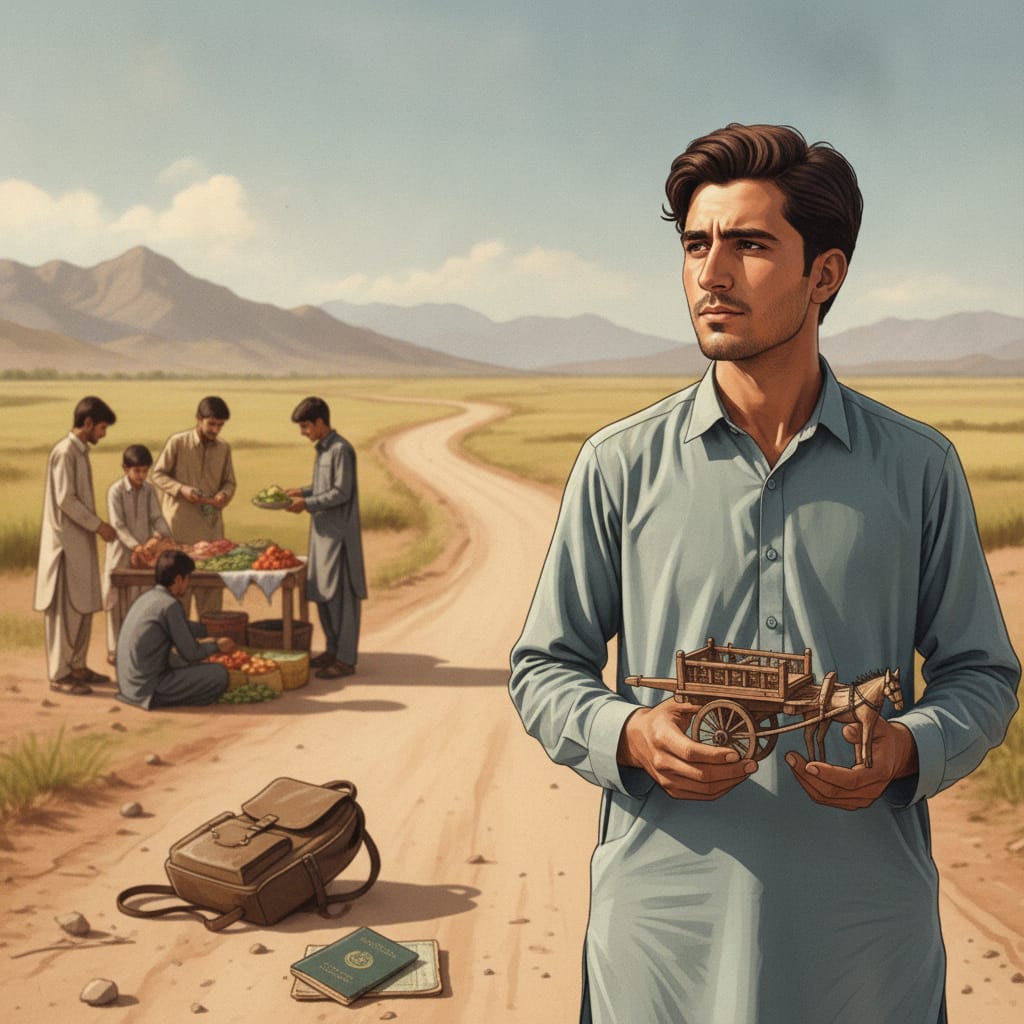
It was probably around the year 2005; my elder brother was not satisfied with his job. I, a friend of mine, and my elder brother went to Kamran Hotel Rawalpindi to meet a lawyer friend. The purpose of meeting the lawyer was that he frequently visited the UK for personal trips and to see his relatives, and being a practical man, he would give us useful advice on leaving this country. During the hour-and-a-half to two-hour meeting, after some lighthearted conversation with the lawyer, when the main issue was brought up, he smiled and advised that instead of going abroad and starting from scratch there, it is better to start some small business in our own country, even if starting with just a small photocopy machine. I felt that after this meeting, my elder brother would be furious with me, thinking what kind of superficial advice an acquaintance of mine had given. But that was my foolishness and my elder brother's magnanimity that upon stepping outside, he not only appreciated the lawyer's opinion but also commended me and the other friend for maintaining such a circle of friends.
If, instead of a sensible friend, we had gone to an agent or consultant who sends people abroad, he would have easily sweet-talked us and handed over a list of expenses, and we would have stretched out our hands to meet those expenses, borrowing from well-off relatives and family members. If the required amount fell short, we would have then chosen a different, cheaper overseas agent who convinced us with a lower cost, and falling into his trap, we would have set about preparing for a journey on every step of which death followed. Call it cowardice or wisdom, my elder brother shouldered the burden of responsibilities by working hard right here in the country, but never took such a risk whose outcome would be so horrifying that the light of a mother's eyes would be washed away in tears, or a father's shoulders would be crushed under a burden that no one else could share.
When it comes to the matter of education and training in Pakistan and its administered areas, if we talk about the mental and technical capacity of the young generation graduating from universities over the past two decades, the mindset of most graduating students, including myself, has been confined merely to passing with good marks. No public or private university has an integrated system through which they can turn a graduating student into a useful asset for the practical field. Emphasizing quantity, universities absolve themselves of their duty simply by conferring degrees of graduation upon as many students as possible. Review the website of any university, and nowhere will you see it written that such a percentage of our educated students are employed or are owners of successful businesses. No such effort is made by the state regarding educational and technical competence to enhance the technical skills of the 65 percent youth population and integrate them into the mainstream, so that while remaining in their own country, they may not only secure a respectable livelihood for themselves but also play a significant role in strengthening their country's economy, and this role of theirs may be recognized at the national level.
In Pakistan and its administered areas, the social structure has been deliberately divided into classes, where even in today's advanced era, technical professions do not enjoy the social standing held by people occupying socially high ranks. As a result of this social division, instead of working in technical fields and speaking of one's profession with pride, deliberate efforts are made to keep one's own or one's ancestors' profession hidden. This long-standing, reprehensible division causes psychological distress in the current generation, and the prevailing influx of capital in society forces even the highly educated to move away from this hypocritical society and earn money—even by doing ordinary menial work—so that upon returning to their homeland, being economically privileged grants them the social respect they could never attain while living here. Earning respect by securing two meals a day and covering all of one's expenses through honest and lawful earnings has not yet become a standard in Pakistan.
Encouraging the launch of small businesses within the education system is not among the priorities of educational institutions or the government. Interest-free loan systems for small businesses were introduced during various periods, but the loan amounts for these businesses were kept lower than a single month's minimum wage of a laborer in developed countries, and even those funds were disbursed in multiple stages, leaving the sustainability of these small businesses and the ability of entrepreneurs to rely on that single business for their daily expenses a major question mark.
Earning respect by securing two meals a day and covering all of one's expenses through honest and lawful earnings has not yet become a standard in Pakistan.
Gauge the seriousness of governments and political authorities regarding youth unemployment from the fact that during a Twitter Space, when an elected member of the Legislative Assembly of Pakistani-administered Jammu and Kashmir and president of a political party was asked why the governments and political leadership of Pakistani-administered Jammu and Kashmir were not focusing on the agriculture sector and why the region's agriculture was declining, he stated that because most of the youth from the Mirpur division of Pakistani-administered Kashmir prefer moving to the UK and Europe, agriculture is unable to develop, and the per capita landholding in other divisions is not large enough to grow good crops by working the land. It was submitted to him that modern agricultural development has reached such an advanced stage that it is quite plausible that in the next fifty years, there might not even be a need for land for small-scale agricultural activities. At the mention of people going abroad, overseas attendees present in the Twitter Space protested strongly, saying that no one bids farewell to their loved ones by choice or leaves their birthplace to endure the reprimands of employers in a foreign land. One friend even said that if the government of Pakistani-administered Jammu and Kashmir provides me the social security that is available to me in the UK or any other country and offers a suitable business environment, I am ready to return tomorrow itself. However, having no suitable answer, the politician deemed it best to simply flee the Space.
In 2018, when I happened to visit Turkey on a private trip, I had the opportunity to meet a large number of illegal migrants in Turkey. In the markets of Istanbul, you can see mostly young illegal migrants from Pakistan and Pakistani-administered Jammu and Kashmir wandering around aimlessly; with some, people involved in human trafficking can be seen bargaining in a tea house or a corner of an Asian restaurant, and you might see someone in a park worried about how to arrange the required amount of money while living illegally in Turkey so that they can cross the border into Greece and set foot in Europe. Talking to these young men revealed that they reached Turkey via Iran by paying a substantial amount of money to an agent and risking their lives, and now the agent was demanding more money to take them to Europe. The Turkish government, having a soft corner for Pakistanis, does not adopt a harsh attitude toward illegal migrants; technically skilled Pakistanis also find work in the leather industry around Istanbul. I also met several young men from Sialkot and Gujranwala who had arrived illegally, but instead of going to Europe, became employed in Turkey and are working in Turkey for decent wages.
The purpose of presenting the example of my own home and sharing my personal experience in the lines above was that following such a massive loss of life in the Greece boat sinking, two types of opinions have emerged: the majority opinion is that a person migrates in search of a better future due to the scarcity of resources, unjust distribution of resources, and the lack of employment opportunities in their own country, and the state and the political elite ruling it are directly responsible for it; another opinion is that instead of adopting an unsafe and illegal method in exchange for 24 to 30 lakh, it would have been better to start a small business with that same money, so they would not have had to lose their lives. While agreeing with both opinions, let me submit that understanding both views can be done in such a way that factors such as inequality, discrimination, substandard expensive education, lack of technical capacity provision, the glitz of the capitalist system, and the determination of social status based on capital and wealth compel a person toward illegal migration. Whether migration is legal or illegal, it does not happen on a voluntary basis. Think about it! In a society where people displaced from one place to another within their own country as a result of war, disasters, unrest, or insurgency are not treated with the same attitudes as those already settled there, how agonizing must it be to migrate from one country to another. After migration, no matter how economically prosperous you may be, the struggle and conflict of becoming part of a new country, a new society, new attitudes, and new values is not so easy; even if the economic values of that society are ideal, an imperceptible limit is definitely set for you.
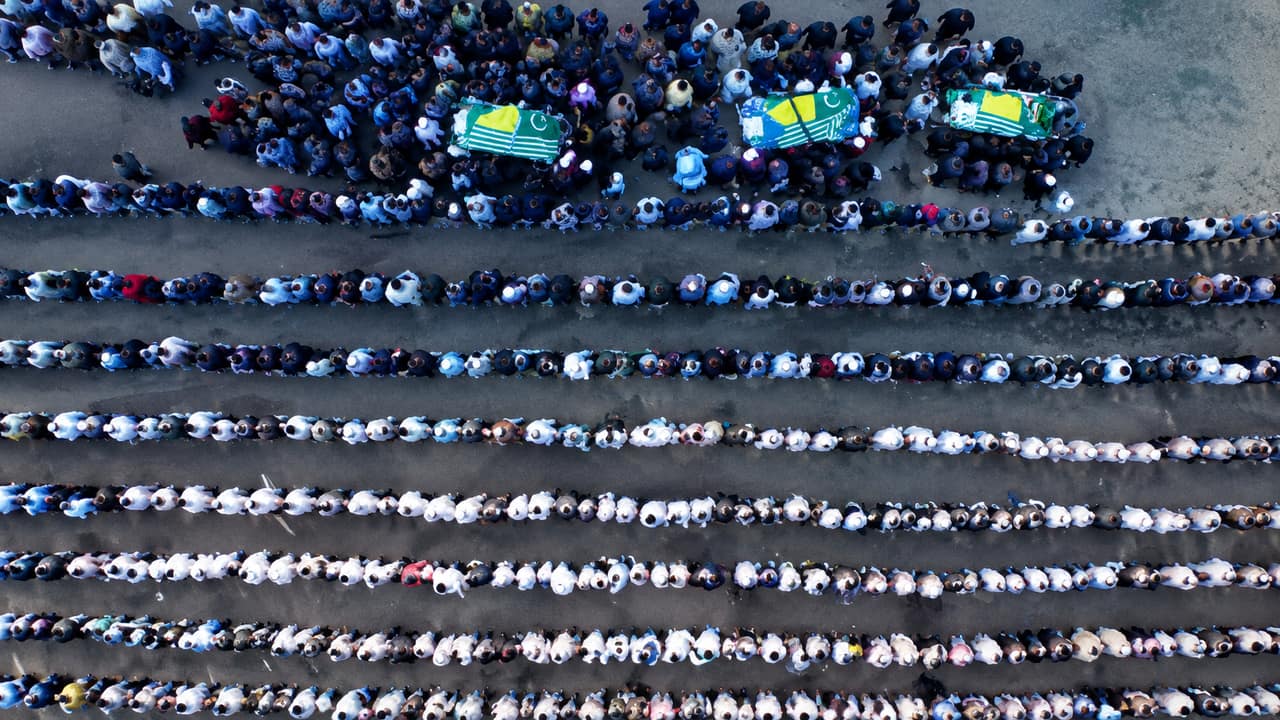
Hundreds of people becoming food for the marine life of the Mediterranean Sea out of greed for wealth or in search of a better future is undoubtedly a human tragedy, and its drivers are the local social system, educational system, local political elite, and the global human trafficking operatives and laws that have not been able to formulate any effective strategy to prevent illegal human trafficking to this day. This tragedy demands emphasizing the need for a new conscious political struggle, educational system, and technical capacity. This tragedy demands that one should not merely settle for financial assistance, redress, and words of comfort for the victims, but that the question be posed from the local political elite to global stakeholders as to why an effective system against illegal human trafficking has not been devised to date?
There is a need to closely monitor the network of facilitators of illegal migration, build connections with organizations and activists working against illegal migration, become more organized, and bring those responsible into local and international custody, and this is only possible through a coordinated political and social struggle.
Comments (0)