

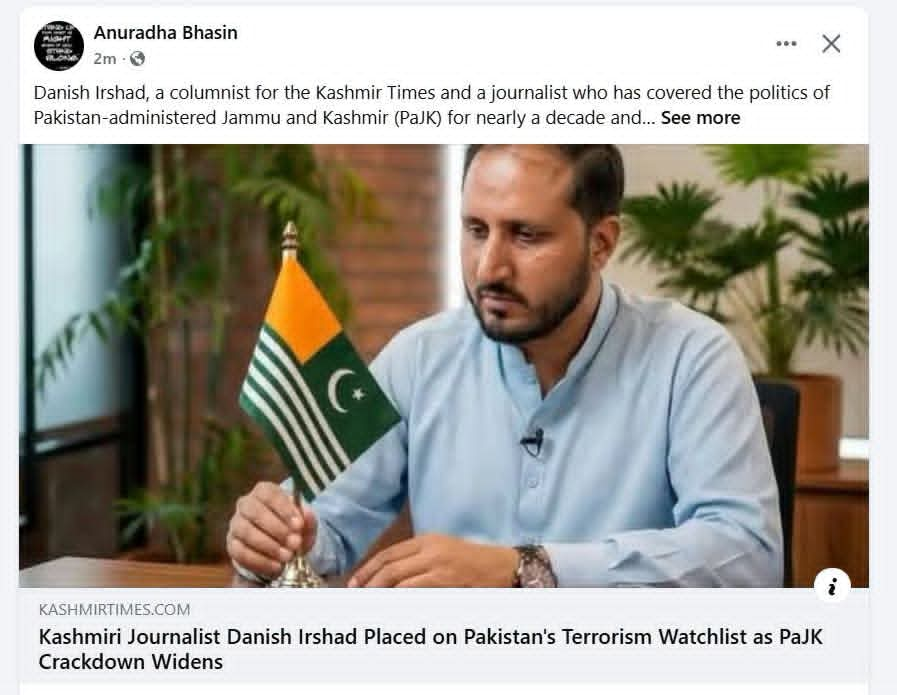
The inclusion of Kashmiri journalist and columnist Danish Irshad in the Fourth Schedule by the Home Department of Azad Jammu and Kashmir has raised serious questions about press freedom, civil liberties and the use of counter-terrorism laws against journalists.
The development has also exposed an uncomfortable contradiction in the region’s journalistic discourse. For years, journalists and political circles in Azad Kashmir criticised restrictions imposed on reporters in Srinagar. Today, journalists in Srinagar are reporting on restrictions imposed on a journalist in Azad Kashmir.
What Is the Fourth Schedule?
The Fourth Schedule is part of Pakistan’s counter-terrorism legal framework. It is used to place individuals under official surveillance when authorities suspect them of links to a proscribed organisation or prohibited activities.
Those placed on the list may face police monitoring, restrictions on movement, difficulties in travelling abroad and financial scrutiny. The inclusion of a journalist in such a list is particularly serious because it can affect not only his legal status but also his professional reputation, livelihood and personal freedom.
The Danish Irshad Case
Danish Irshad has worked for several years as a journalist covering politics, society and public issues in Azad Kashmir. He is also a columnist for Kashmir Times and is known for his reporting and analysis of the region’s internal politics.
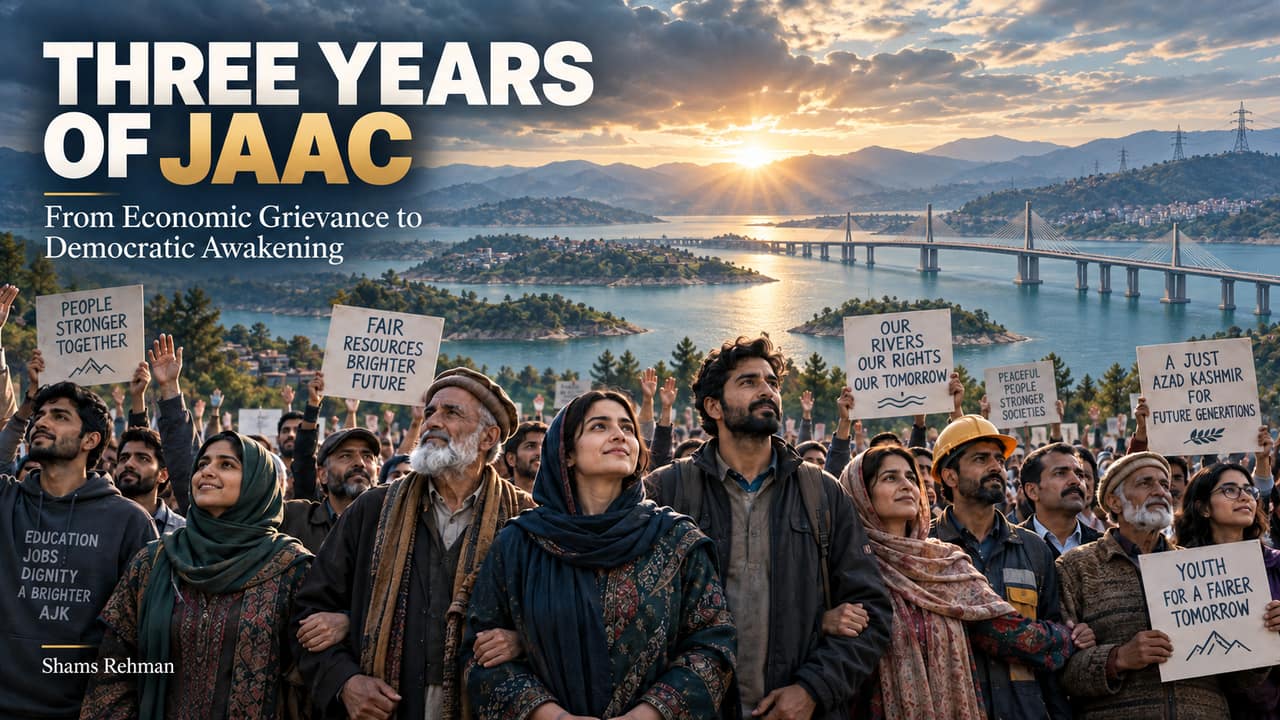
According to available reports, he was placed on the Fourth Schedule alongside individuals allegedly linked to the Jammu and Kashmir Joint Awami Action Committee. However, it remains unclear what specific evidence has been presented against him and whether his journalistic activities or political reporting formed the basis of the action.
This raises a fundamental question: can reporting on a political movement, conveying its demands to the public or expressing alleged sympathy for it be treated as evidence of terrorism? If the authorities possess substantial evidence, it should be presented through a transparent legal process.
Srinagar and Muzaffarabad
In the past, journalists and political groups in Azad Kashmir repeatedly criticised restrictions, arrests and curbs on freedom of expression imposed on journalists in Srinagar. The fact that Kashmir Times, published from Srinagar, is now reporting on restrictions imposed on a journalist in Azad Kashmir presents a striking moment for the region’s media.
The irony is difficult to ignore. Until yesterday, journalists in Azad Kashmir were raising their voices against restrictions on their colleagues in Srinagar. Today, journalists in Srinagar are reporting on restrictions imposed on journalists in Azad Kashmir.
This development highlights the difficult environment in which journalism operates across both parts of Kashmir, where the media remains caught between state pressure, national-security narratives and political sensitivities.
Press freedom should not be determined by geography, political affiliation or competing state narratives.
The standard for press freedom should not depend on which side is imposing the restriction or which side is being targeted. If restrictions on journalists in Srinagar are considered a violation of press freedom, placing a journalist in Azad Kashmir on the Fourth Schedule should also be treated as a matter of serious concern.
Dissent and Terrorism
Governments have the authority to maintain public order and act against terrorism. However, counter-terrorism laws are intended to address armed and violent activities—not to silence peaceful political dissent, critical journalism or the reporting of public movements.
When journalists, political activists and members of protest movements are placed in the same legal category, it creates the impression that counter-terrorism legislation is being used to suppress disagreement. Such practices damage press freedom and undermine public confidence in the government’s own position.
Questions Requiring Answers
The authorities should clarify several issues in the Danish Irshad case:
- What is the specific legal basis for placing him on the Fourth Schedule?
- What is the nature of the evidence against him?
- Was he given prior notice and an effective opportunity to be heard?
- Was he allowed to defend himself and appeal the decision?
- Were his journalistic activities or political reports used as grounds for the action?
- How long will the restrictions remain in force?
- What legal procedure is available for his removal from the list?
Placing an individual on a terrorism-related watchlist is a serious measure. Its consequences can extend to the person’s social, financial and professional life. Such decisions therefore require transparency, legal justification and a meaningful right of appeal.
The Need for Transparency
If the government believes that Danish Irshad or any other individual has violated the law, it should establish its case through due legal process. Restrictions based merely on vague allegations, undisclosed intelligence or political associations risk violating fundamental principles of justice.
Journalists’ organisations, human-rights groups and political parties should seek clarity on the legal basis and reasons for the decision. The details should be made public so that the matter can be assessed on the basis of evidence rather than rumours or political accusations.
Conclusion
The placement of Danish Irshad on the Fourth Schedule is not merely an administrative action against one journalist. It is a test of the relationship between journalism, dissent and state power in Kashmir.
Press freedom should not be determined by geography, political affiliation or competing state narratives. Whether in Srinagar or Muzaffarabad, restrictions, surveillance and the inclusion of journalists on terrorism-related lists must be examined according to the same standards of transparency, due process and human rights.
Times change, but the real test of journalism remains constant: freedom of expression must be defended not only when restrictions affect one’s opponents, but also when they reach one’s own colleagues.
Comments (0)