
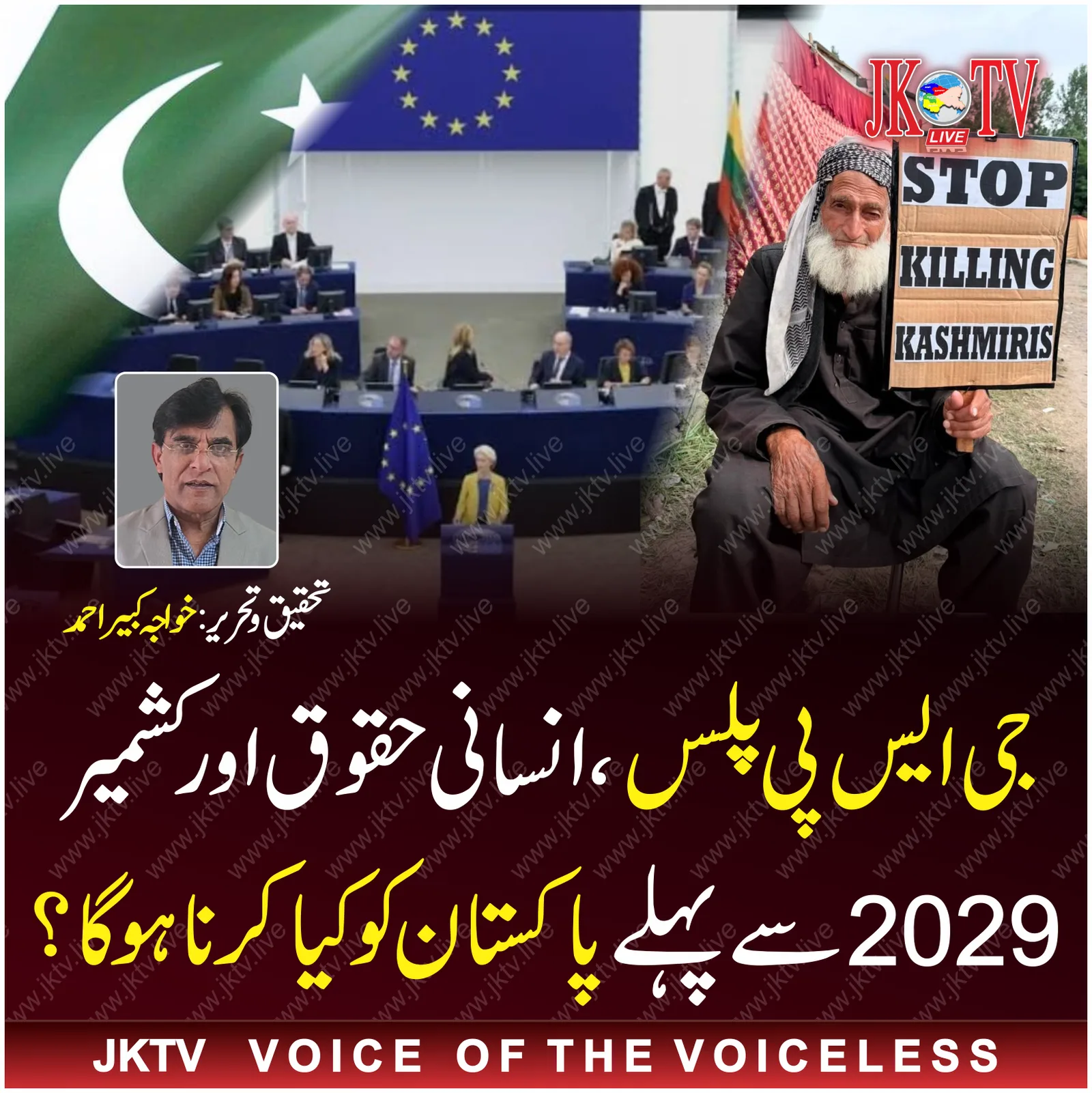
The European Union's GSP+ (Generalized Scheme of Preferences Plus) for Pakistan is not merely a trade facility, but an important system linked to international obligations concerning human rights, labor rights, environmental protection, good governance, and fundamental freedoms. Pakistan has been benefiting from GSP+ since January 1, 2014, and this facility holds exceptional economic importance for Pakistani exports to the European market, particularly textiles and apparel.
According to the European Union, a fundamental requirement for benefiting under this system is the effective implementation of relevant international conventions alongside their ratification. Now, a very important development has emerged in this matter. The EU Ambassador to Pakistan, Raimundas Karoblis, clearly stated in a recent interview that the continuation of GSP+ for Pakistan in 2029 is neither certain nor guaranteed.
According to him, a decision regarding the future is expected in the first half of 2029, and the state of Pakistan's implementation of relevant United Nations human rights conventions will play a crucial role in this decision. He noted that Pakistan has time for reforms, but mere laws or treaty ratifications are not enough; practical steps and a clear political will are required.
This statement carries a clear message for Pakistan. The question is no longer how many international treaties Pakistan has ratified, but rather to what extent the rights derived from these treaties are practically accessible to the people living within Pakistan. Here, it is essential to clarify a fundamental constitutional, political, and international distinction, because the human rights situation within Pakistan proper and that in Pakistan-administered Jammu and Kashmir cannot be placed in the same constitutional category.
Pakistan's four provinces—Punjab, Sindh, Khyber Pakhtunkhwa, and Balochistan—are part of the constitutional state of Pakistan, and the people living in them are citizens of Pakistan. The protection of these citizens' fundamental human rights is both Pakistan's own constitutional responsibility and required under the international human rights treaties Pakistan has ratified.
Therefore, when issues arise in these provinces concerning enforced disappearances, extrajudicial killings, freedom of expression, press freedom, political participation, peaceful assembly, fair trial, or minority rights, they are viewed through the lens of Pakistan's own citizens' fundamental rights and international obligations. In contrast, the status of Pakistan-administered Jammu and Kashmir is fundamentally different.
The State of Jammu and Kashmir is an internationally disputed territory on the agenda of the United Nations, whose final political status is yet to be determined. Pakistan-administered Jammu and Kashmir is not a constitutional province of Pakistan, but rather a region over which Pakistan exercises administrative authority. This very distinction does not lessen Pakistan's responsibility; rather, in many ways, it makes it more sensitive.
Here, Pakistan faces accountability under international human rights standards and its international commitments not merely on the basis of its state relationship with constitutional citizens, but as a state exercising effective administrative authority in a disputed territory. Consequently, the protection of the lives, liberty, dignity, freedom of expression, peaceful assembly, political participation, fair trial, and other fundamental human rights of the region's inhabitants remains no longer just a domestic political matter, but also assumes significance within the context of international human rights monitoring.
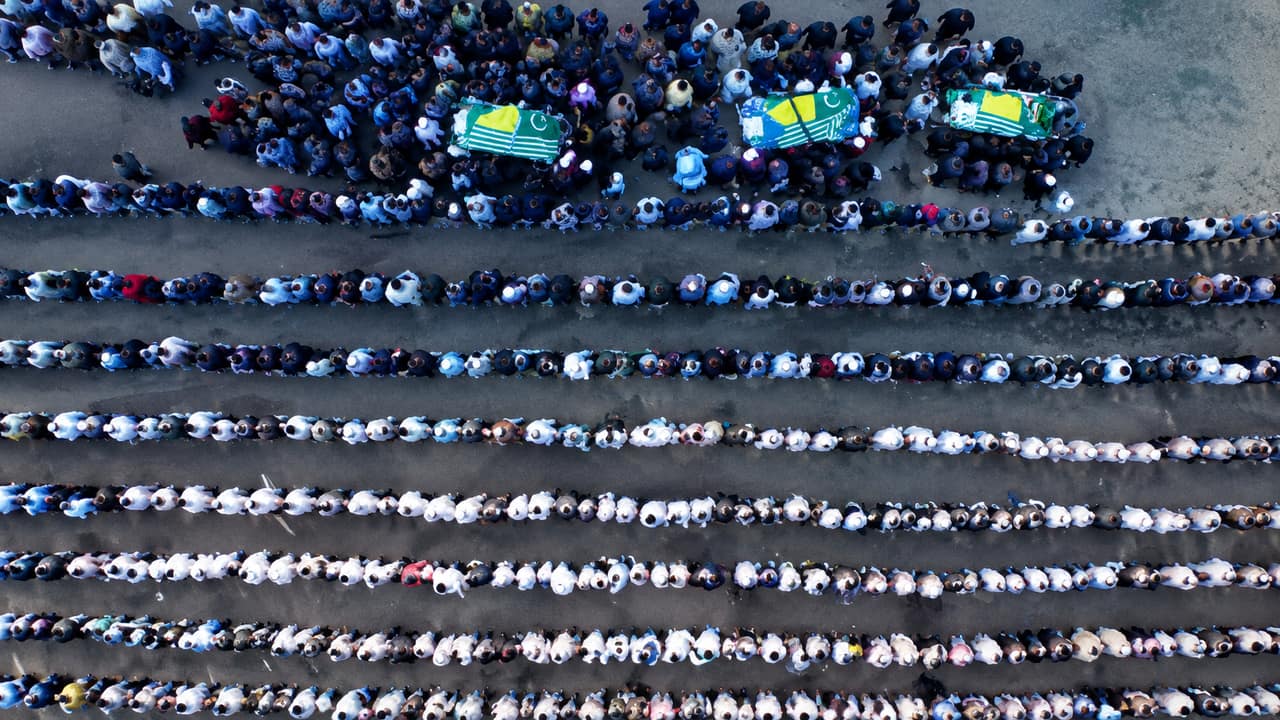
This aspect is also important because a large portion of the population of Pakistan-administered Jammu and Kashmir lives outside the region, particularly in Britain and Europe. According to various available estimates, a significant Kashmiri population originating from this territory resides abroad, with a prominent share living in Britain and Europe. If the situation regarding political rights, freedom of expression, peaceful protest, or other fundamental human rights deteriorates in Pakistan-administered Jammu and Kashmir, the voices of its inhabitants are not confined merely to the local level; Kashmiris living abroad also raise their voices in democratic societies, taking their grievances and demands to their representatives, parliaments, human rights organizations, and European institutions.
Thus, the human rights situation in the disputed territory administered by Pakistan can become a source of additional international attention and diplomatic and human rights pressure on Pakistan. Therefore, it is important for Pakistan to understand that while protecting the fundamental rights of citizens in its four provinces is a core constitutional and state duty, the issue of rights for the people in the disputed territory of Pakistan-administered Jammu and Kashmir is even more sensitive due to the region's unique international status.
Any credible information regarding the use of force, political dissent, peaceful protest, arrests, or alleged human rights violations there does not remain under discussion solely at the domestic level, but can also reach the diaspora community, human rights organizations, European parliaments, civil society, and other international bodies. This is why the better path for Pakistan is to ensure the protection of the fundamental rights of the people there not out of fear of external pressure, but under the demands of its own responsibility, the rule of law, and its administrative role in a disputed region.
This distinction is equally important in the context of GSP+. When evaluating a country's overall human rights situation, the European Union looks at the country's international obligations. The question of effective implementation of the international conventions ratified by Pakistan relates to Pakistan's overall obligations. Therefore, alongside human rights violations occurring within Pakistan's constitutional territories, the human rights situation in regions where Pakistan exercises effective administrative authority is also significant.
Here, another fundamental principle in the case of Kashmir cannot be overlooked. Declaring Pakistan-administered Jammu and Kashmir a regular province of Pakistan would not eliminate the disputed status of this region either. Similarly, describing the people of this region merely as ordinary citizens of Pakistan also ignores their specific political and constitutional status. The protection of the fundamental human rights of the inhabitants there stands on its own, while the question of the final political status of the State of Jammu and Kashmir stands on its own.
The EU Ambassador to Pakistan, Raimundas Karoblis, clearly stated in a recent interview that the continuation of GSP+ for Pakistan in 2029 is neither certain nor guaranteed.
This distinction becomes even more critical when events involving political protests, public movements, freedom of expression, press freedom, or the use of state force in Pakistan-administered Jammu and Kashmir are discussed. If peaceful citizens protest for their political, constitutional, or economic rights, the primary duty of the state should be to listen to their demands, engage in dialogue, and, if a violation of law is alleged, decide the matter through a transparent legal process.
If allegations emerge in any incident regarding the use of force, arrest, detention, alleged enforced disappearance, extrajudicial killing, or barring journalists from working by Pakistani forces, independent, transparent, and credible investigations must be conducted. Instead of treating any allegation as an absolute truth, it is essential to arrive at the truth based on credible evidence, eyewitness accounts, medical records, photographs and videos, court documents, and independent human rights investigations.
This is precisely where the EU's GSP+ issue connects with Kashmir for Pakistan. It would be incorrect to say that Pakistan's GSP+ will automatically terminate as a result of a single incident. The GSP+ process is far more complex than that. However, it is equally incorrect to assume that credible and continuous reports regarding human rights in Pakistan-administered Jammu and Kashmir or any part of Pakistan will remain entirely outside the global monitoring process.
The European Union evaluates Pakistan's performance under GSP+ based on information received from various sources, which may include relevant UN monitoring bodies, European institutions, civil society, and other credible sources. Therefore, the real necessity for Pakistan is to establish an effective internal reform system rather than merely responding to external criticism.
An important development has now emerged within this monitoring process. On July 16, 2026, the European Commission stated in its GSP+ review of Pakistan for 2023 to 2025 that serious and systemic challenges remain regarding the implementation of human rights in numerous areas, and backsliding has been observed in certain sectors, particularly regarding enforced disappearances, minority rights, press freedom, freedom of expression, and peaceful assembly.
In the same review, the Commission also clarified that future GSP+ monitoring is not limited merely to the ratification of treaties, but focuses on their effective practical implementation. Subsequently, on August 31, 2026, the EU Ambassador to Pakistan, Raimundas Karoblis, also clarified that the continuation of GSP+ for Pakistan after 2029 is not 'certain or guaranteed,' and the decision will be based on Pakistan's practical implementation of UN conventions.
This demonstrates that while Pakistan is not currently facing any immediate termination of GSP+, its human rights record is under regular and serious monitoring for the 2029 decision. The mention of issues such as enforced disappearances, extrajudicial killings, freedom of expression, journalists' rights, and minority rights by the EU Ambassador should be viewed in this broader context.
These issues should not be resolved merely to evade external pressure, but because the true strength of a state arises from the trust of its citizens. Pakistan must also understand that its diplomatic importance in global politics has its place. If Pakistan plays a mediating role between the United States and Iran, or undertakes diplomatic efforts to resolve Gaza and other global conflicts, that is certainly important.
However, a country's diplomatic significance does not exempt it from international human rights obligations. The same fundamental principle emerges regarding GSP+: political importance and human rights standards are kept separate. Pakistan still has time. The decision of 2029 is not to be made today, but the steps Pakistan takes up to 2029 can form the basis of that decision.
Therefore, the real question is not what will happen in 2029; the real question is what Pakistan will do by 2029. If Pakistan initiates serious reforms starting today for the protection of citizens' fundamental rights in all four provinces, the elimination of enforced disappearances, independent investigations into allegations of extrajudicial killings, and the effective safeguarding of press freedom, freedom of expression, and political participation, the benefits will not be limited to GSP+ alone.
This will also strengthen the rule of law, democratic institutions, and public trust within Pakistan. Similarly, in the disputed territory of Pakistan-administered Jammu and Kashmir, it is necessary to prioritize political dialogue, negotiations, and constitutional and political procedures over the use of force. Recognizing the specific disputed status of the inhabitants there, their fundamental human rights, political freedoms, and the right to peaceful assembly must be respected.
One may disagree with any political demand, but treating peaceful dissent as a crime or hostility is no solution to the problem. Pakistan must also remember that human rights are not only for those with whom the government agrees. The true test of human rights occurs when citizens disagree with state policy. The strength of a democratic society is measured not by how quickly it silences dissenting voices, but by how much tolerance, law, and justice it uses to listen to dissent.
The Pakistani public, political parties, lawyers, journalists, intellectuals, and civil society should not view the human rights issue as a campaign against Pakistan. Whether it concerns the rights of citizens living in Pakistan's four provinces or the fundamental human rights of the inhabitants of the disputed State of Jammu and Kashmir administered by Pakistan, the demand for their protection is essentially a call for building a society where the relationship between the state and the people is established on law and trust rather than force.
The Pakistani government should not wait for 2029. Effective reforms should be initiated today, not out of fear of any European Union decision, but out of respect for the rights of its own people. Guaranteeing the fundamental rights of citizens in Pakistan's four provinces, and protecting the fundamental human rights, political freedoms, and right to peaceful protest of the people in the disputed State of Jammu and Kashmir administered by Pakistan while keeping their specific political and constitutional status in view, must be ensured.
There should be independent investigations into every allegation, every citizen should receive justice according to the law, journalists should be allowed to work freely, peaceful political dissent should be resolved through dialogue rather than force, and state institutions should be made accountable within the bounds of law and the constitution. Pakistan has a choice: either wait until 2029 and face a global decision, or institute reforms today to show the world that Pakistan considers human rights not as an external condition, but as its state responsibility.
It is also the responsibility of the Pakistani public to raise their voices for the fundamental rights of every citizen in their country while also demanding that the respect and protection of the human and political rights of the peaceful inhabitants of the disputed State of Jammu and Kashmir administered by Pakistan be ensured. Tell the government that dissent should be resolved through dialogue, not force; independent investigations should be conducted instead of hiding allegations; and human rights should be recognized on the basis of justice, law, and humanity, rather than due to global pressure.
Because a strong Pakistan is not one whose citizens are terrified of it; a strong Pakistan is one that its citizens trust.
Comments (0)